
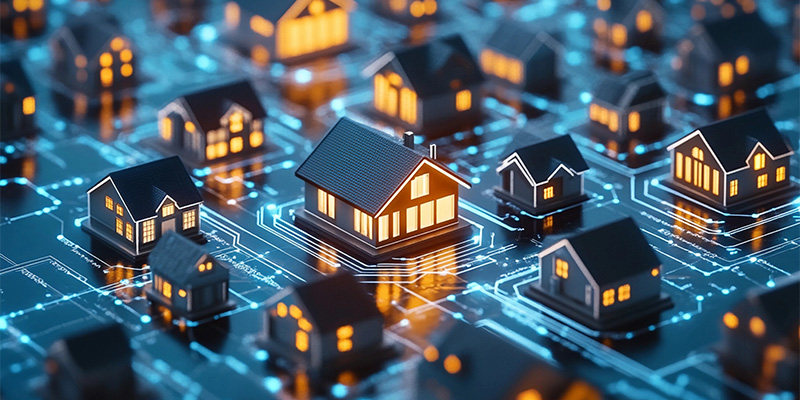
Technology is transforming community management, making it increasingly necessary to learn how to utilize AI for HOA tasks. Artificial intelligence can help boards and managers work smarter, reduce costs, and improve resident satisfaction. When applied carefully, it can streamline daily operations and free up time for board members to focus on the bigger picture.
How to Use AI for HOA Management
Artificial intelligence is not just a trend. It is a practical tool that addresses many of the challenges HOAs face. From collecting dues to interpreting financial reports, AI offers efficient solutions that reduce stress for board members and managers.
Here’s how to use AI for HOA management.
1. Automate Dues Collection
Using AI for homeowners association management can make dues collection smoother. AI tools can send automated reminders, track payments, and flag accounts that fall behind. In some cases, they can even suggest payment plan options for struggling homeowners.
Dues are the financial backbone of an HOA. Automating this process will help improve cash flow and reduce the burden on board members or managers. It can also minimize the awkwardness of chasing late payments, since the system can handle reminders consistently and neutrally.
2. Forecast the Annual Budget
Budget planning is often one of the toughest jobs for any HOA. AI can analyze historical financial data and market trends to predict expenses with more accuracy. This can help the board prepare for future costs and avoid surprise shortfalls.
A well-forecasted budget will support more stable dues and healthier reserves. With AI’s predictions, communities can plan instead of scrambling when unexpected expenses arise.
3. Monitor Expenses
Tracking expenses across multiple vendors, utilities, and projects can come as a complex task. AI can automatically scan invoices, compare them to past spending, and alert the board to unusual spikes or errors.
Expense monitoring can help prevent fraud, catch billing mistakes, and ensure accountability. Boards can feel more confident knowing it can track every dollar with precision through AI.
4. Interpret Financial Reports
Boards often struggle with financial statements that are lengthy or full of technical details. AI can summarize monthly reports, highlight variances, and point out areas where the community is over- or under-budget. This is a practical way to show how to use AI for HOA financial oversight.
With financial summaries, board members can save time. It can also help board members who may not have a financial background. It can also allow boards to make decisions more quickly and clearly.
5. Predict Maintenance Needs
Using AI in community management will allow boards to identify issues before they become costly emergencies. AI systems can analyze data from maintenance logs, weather patterns, and equipment use to predict when repairs will be needed.
Proactive maintenance helps save money and extends the life of community assets. Residents will also benefit from fewer service disruptions and a safer, more reliable environment.
6. Assess Bids and Proposals
Boards often receive multiple vendor proposals for projects. AI can compare bids side by side, summarize key points, and highlight what is included or excluded in the price.
Many board members don’t have the time to review lengthy proposals, much less in a comprehensive way. AI helps ensure that the board makes informed choices. This ultimately leads to better vendor selection and cost savings.
7. Automate Administrative Tasks
Repetitive tasks such as record-keeping, scheduling, and document filing can all fall under AI. For AI for HOA management companies, this is especially useful, since they often juggle responsibilities across multiple communities.
Automating administrative work will help free managers and board members, allowing them to focus on leadership and strategic decisions. It can also reduce the risk of human error in record management.
8. Summarize Meeting Minutes
Time and focus are two critical components of creating accurate meeting minutes. AI tools for HOA can listen to recordings, transcribe discussions, and generate draft minutes within minutes.
This helps the board keep accurate records. Moreover, it makes it easier to share updates with residents. It also saves volunteers or managers hours of manual work after each meeting.
9. Draft Communications
Association boards often need to send reminders, newsletters, or notices. AI can draft letters and emails quickly, saving time while maintaining a professional tone. This is another example of how to use AI for HOA operations.
Clear communication is important for building trust between the board and homeowners. With AI handling drafts, boards can focus on tailoring messages to reflect the community’s culture and needs.
10. Provide Virtual Assistants and Chat Bots
AI-powered chatbots and virtual assistants can answer routine questions from residents. They can handle inquiries about dues, rules, maintenance requests, or even provide links to forms and documents.
With AI, residents can get instant responses instead of waiting for office hours or contacting board members late at night. This helps reduce call and email volume for both boards and managers. As a result, AI can improve efficiency and homeowner satisfaction at the same time.
How Not to Use AI in HOA Management
While AI offers many advantages, it is not a perfect tool. Boards must exercise caution about how to use AI for HOA tasks. There are clear limits to what AI can and should do. When it comes to AI, board members should not:
- Rely on AI for Legal Advice. AI may generate inaccurate or misleading interpretations of laws or case rulings. It is always best to consult an attorney for legal matters.
- Remove Human Oversight. AI can misinterpret data, and the board is still responsible for reviewing results. A human eye is essential for accuracy.
- Compromise Data Privacy. AI systems usually handle sensitive financial and resident information. Boards must enforce strict privacy policies and ensure vendors follow security best practices.
- Replace Board Judgment. AI is a tool, not a decision-maker. Final decisions must come from the board, which represents the community.
When misused, AI can pose liability risks for the association and the board. Misusing AI can also damage trust and harm the reputation of the community. With this, board members must always balance the use of technology with leadership.
The Bottom Line
Learning how to use AI for HOA management can offer numerous benefits for leaders and managers. It can automate dues collection, predict maintenance needs, and interpret financials, among other things. With AI, boards can simplify complicated tasks. Still, the key is to treat AI as an assistant and not a replacement for the board.
Clark Simson Miller offers HOA management services to community associations. Call us today at 865.315.7505 or reach out to us online to request a proposal!
RELATED ARTICLES:
- Is Having An HOA Mobile App For Homeowners Necessary?
- Cloud Computing for HOAs: A Guide to Modern Community Management
- The Need For Integrated Banking For HOAs